ODYSSEIA R.2 (Fragmenta Gorgonis)
> about the image:
In somnis, quod prohibetur redit sub forma pulchritudinis.
(in dreams, what is forbidden returns in the form of beauty – fragmentum apocryphum)
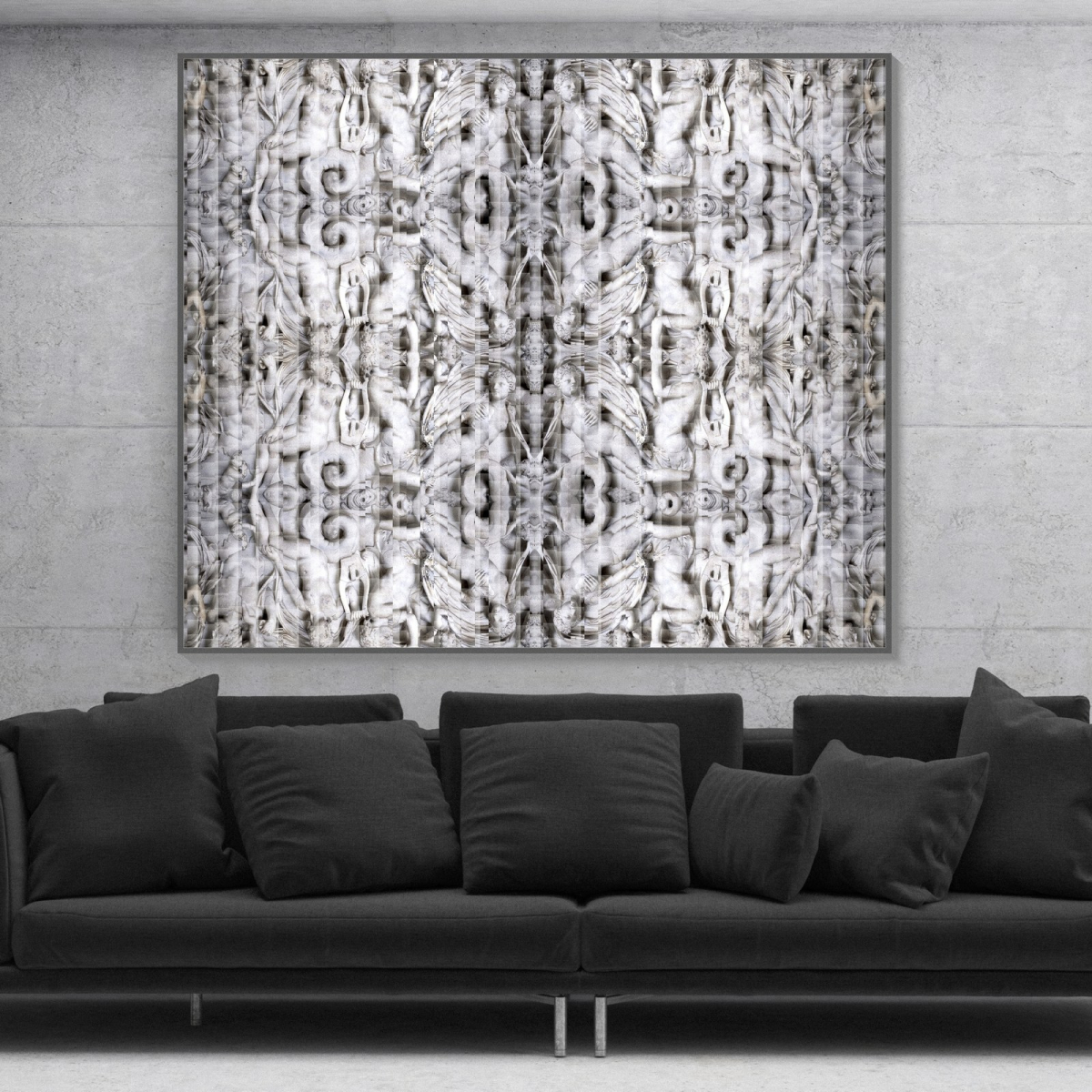
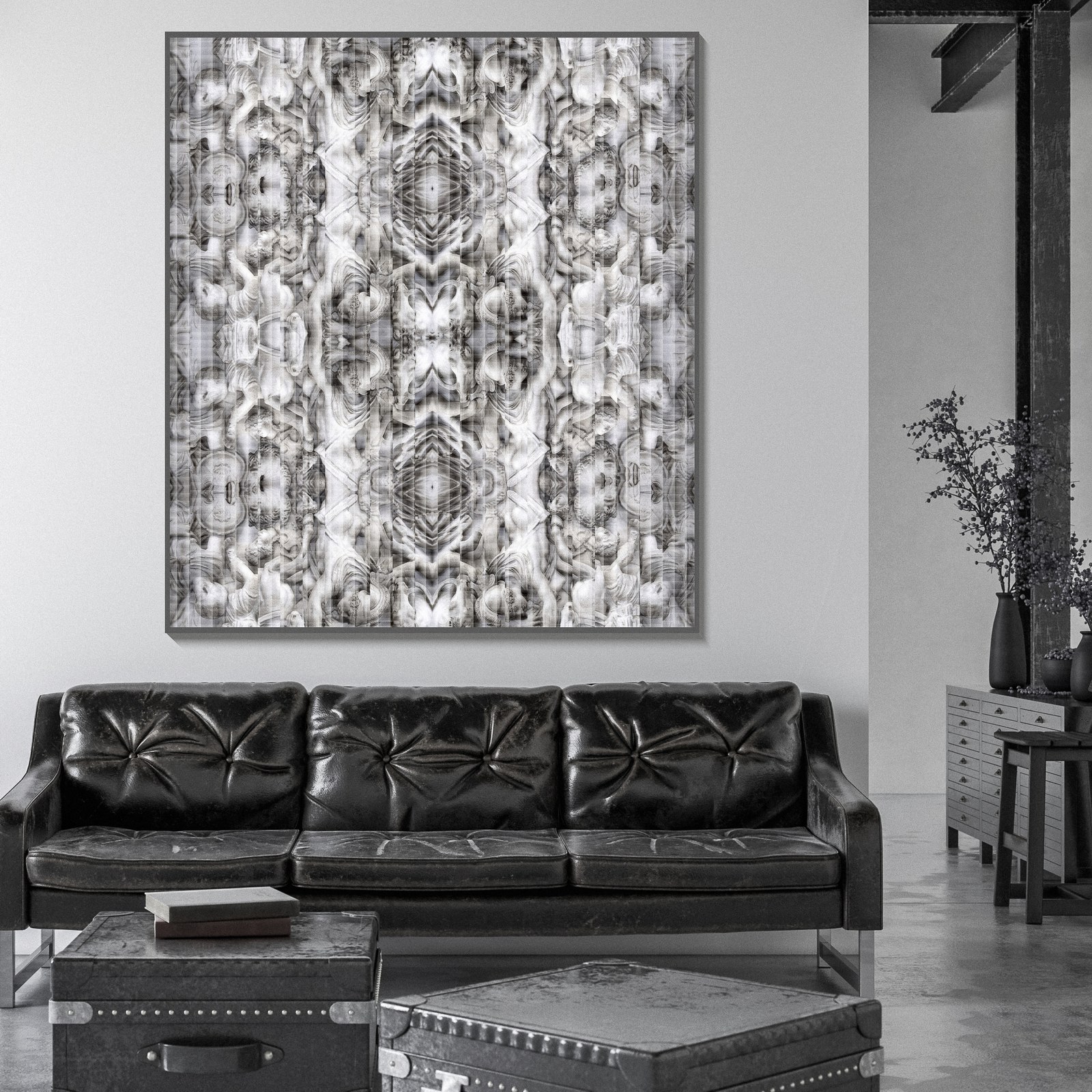
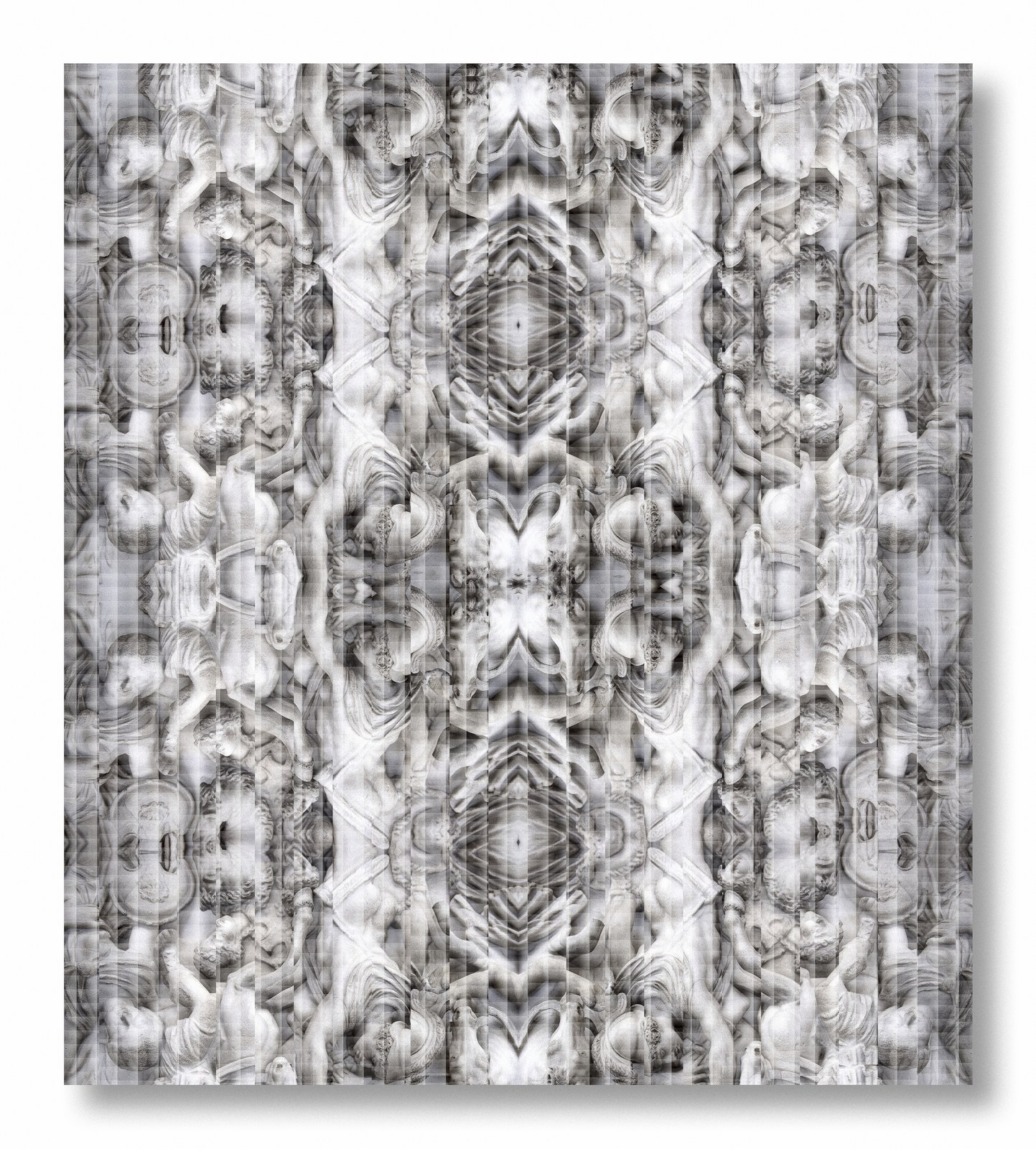
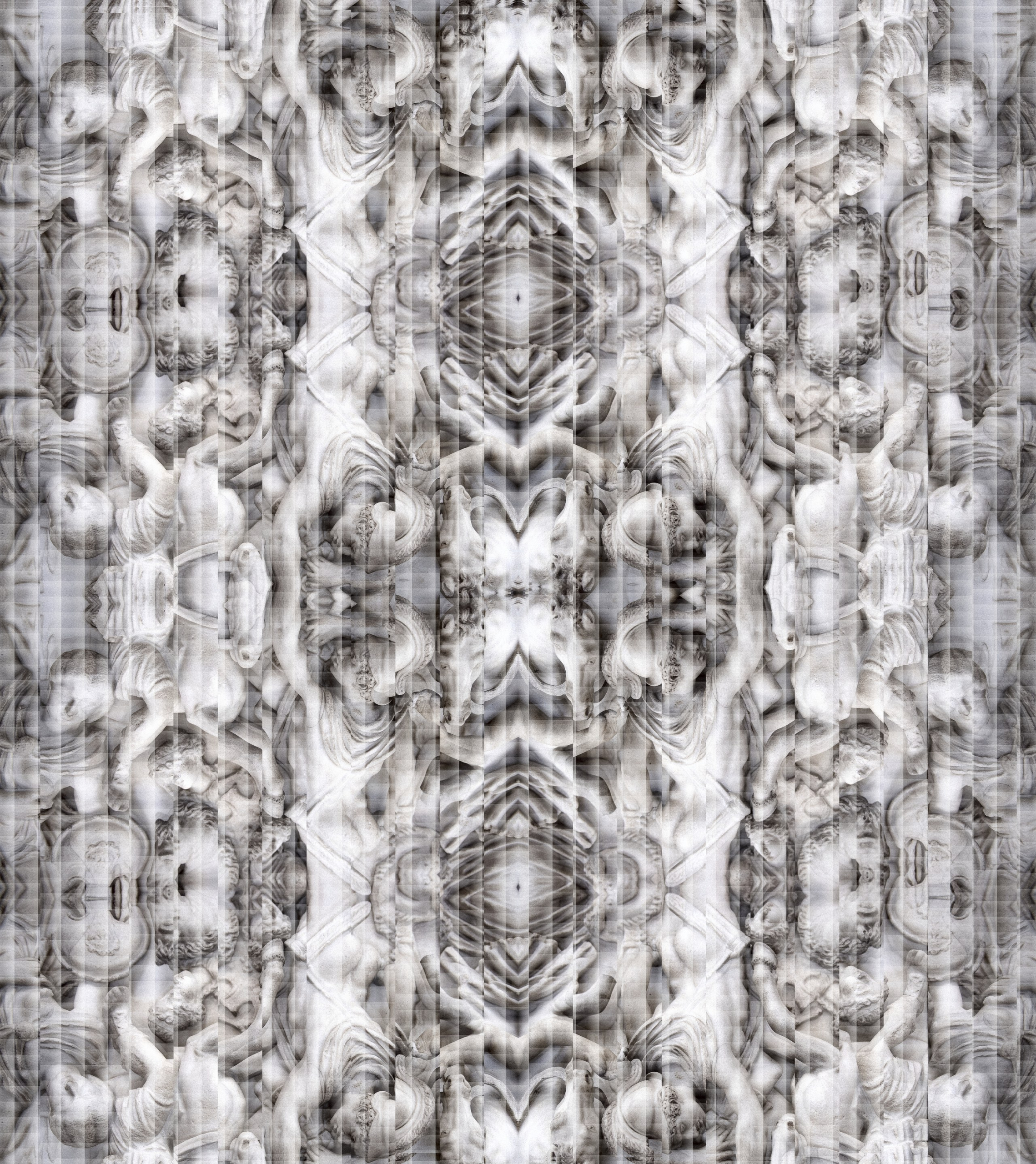
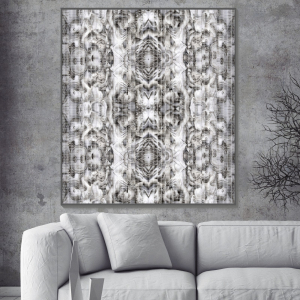
ODYSSEIA R.2 (Fragmenta Gorgonis) shifts the Homeric problematic from “map” to “apparition.” If the Odyssey is the epic of return, it is also the epic of deferral: a prolonged postponement of resolution, a narrative sustained by detours, substitutions, and tests that repeatedly displace the subject from any stable home. This work translates that logic into a surface where meaning behaves like a dream—emerging, dissolving, and re-forming without submitting to definitive interpretation. The title’s insistence on Fragmenta is not an aesthetic description but a conceptual claim. Fragmentation here is the condition of contemporary memory: the classical world reaches us discontinuously, through shards – museum fragments, textbook reproductions, cinematic residues, tourist glances, inherited iconographic habits. Crișan’s procedure radicalises this condition by treating the fragment not as loss but as a generative unit. The image becomes a site where relics are not restored into wholeness but recomposed into a new symbolic economy. The gods persist, but as dispersed signals rather than sovereign bodies. Myth survives as pattern, rhythm, recurrence. The Gorgon reference is decisive because it names a particular kind of encounter: one that cannot be looked at innocently. In antiquity, the gorgoneion is an apotropaic device, placed at borders and on shields to convert danger into protection. Psychoanalysis recognises a homologous structure: what is most feared is often what returns as symptom, fascination, or aestheticisation. Freud’s dream-work offers the mechanics – condensation and displacement – but Lacan sharpens the stakes: the traumatic kernel of the Real cannot be integrated directly, so it returns through the detour of the signifier, staged as a visual event that both attracts and disturbs. The “Gorgon” becomes, in this sense, a figure for the limit of representation – an emblem of what cannot be fully symbolised, yet cannot be excluded. The Odyssey’s monsters are not simply external threats; they are narrative machines that test identity under pressure. Read oneirically, they are configurations of desire and anxiety: seduction, aggression, forgetting, repetition. ODYSSEIA R.2 treats myth in this register. The image does not deliver a single iconographic message; it offers a field in which interpretation is activated, suspended, and reactivated. Meaning is produced in the act of looking, yet never stabilised as doctrine. This semiotic instability is not incidental – it is the work’s philosophical position. Beauty is not the closure of meaning, but the condition under which the forbidden can return without immediately being rejected. A Jungian reading intensifies the work’s relevance to the series. The Odyssey’s return is individuation under duress: a passage through archetypal trials rather than moral lessons. In this frame, the Gorgon is not merely terror but a threshold-image: a sign that marks the border between the cultivated self and its archaic remainder. What the work ultimately “documents” is not a mythological episode but a psychic itinerary—an oneiric metamorphosis in which the classical canon becomes a mirror for contemporary interiority.
> series statement:
FRAGMENTA DEORUM reexamines classical mythology through a contemporary process of visual decomposition and reassembly. In this series, Alexandru Crișan approaches the divine body not as a fixed icon but as a mutable structure – an image that can be dismantled, reorganized, and reanimated through the logic of the fragment. Trained as an architect, Crișan adopts an analytical method in which sculpture becomes material, symmetry becomes strategy, and the image behaves like a spatial system rather than a narrative scene. Each work operates within a field of controlled instability. Fragments of ancient reliefs, gestures, and anatomical details are multiplied and recomposed into new configurations where recognition and uncertainty coexist. These images provoke pareidolia: faces emerge where none were placed, mythic creatures surface from folds of marble, and bodies appear to oscillate between coherence and dissolution. Meaning does not reside in any single element but in the shifting relations among them. The series engages mythology as a psychological reservoir rather than a storytelling device. Echoes of Greek and Roman deities – Medeia, Hecate, Cassiopeia – are not depicted but inferred, surfacing through repetition, distortion, and dream-like recombination. This oneiric dimension aligns the work with psychoanalytic readings of the image, where memory, desire, and symbolic residue intertwine. The divine re-enters contemporary vision not as a stable figure but as an afterimage: a structure of intimation, erosion, and metamorphosis. FRAGMENTA DEORUM proposes that fragmentation is a generative force. Through decomposition, the sacred is not lost but redistributed; through recomposition, myth becomes newly legible. Each artwork stands as a contemporary relic, a threshold where architecture, mythology, and the unconscious converge. Crișan’s images reveal that the gods persist – not in their intact forms, but in the fragments through which they continue to speak.
> project page: FRAGMENTA DEORUM
> Special Large Collector’s Edition of 10, numbered from 1/10
> Format SL1 90CM, SL2 120cm, SL3 150cm on shortest edge
> “ODYSSEIA R.2 (Fragmenta Gorgonis)” is available for purchase in one unique Art Limited Collector’s Edition of 10 and 2 Artist’s Proofs, in giclee archival art print at the highest museum quality standards, on Fine Art cotton paper from Hahnemuhle with pigment ink. The Collector’s Editions are certified signature editions, stamped and numbered on the back side. Additionally, as a separate document, a dedicated signed Certificate of Authenticity, with artwork title, date and edition number, indicate that you have purchased an original exclusive artwork. No further reproduction of any kind will be run after the collector edition is sold out. The prices for Special Large Collector Editions are progressive. For other detailed information’s see the section ART PRINTS.
Copyright © 1996-2026 Alexandru Crisan. All Rights Reserved. All photographs are the property of Alexandru Crisan. No part of the photographs or texts presented on this website may be reproduced, stored or transmitted in any form for any purpose whatsoever, whether by electronic media, photocopy, or any other means of reproduction without the written permission and/or signed consent of the author. Please read TERMS OF USE.