(Fragmenta Arcadiae) | CASSIOPEIA
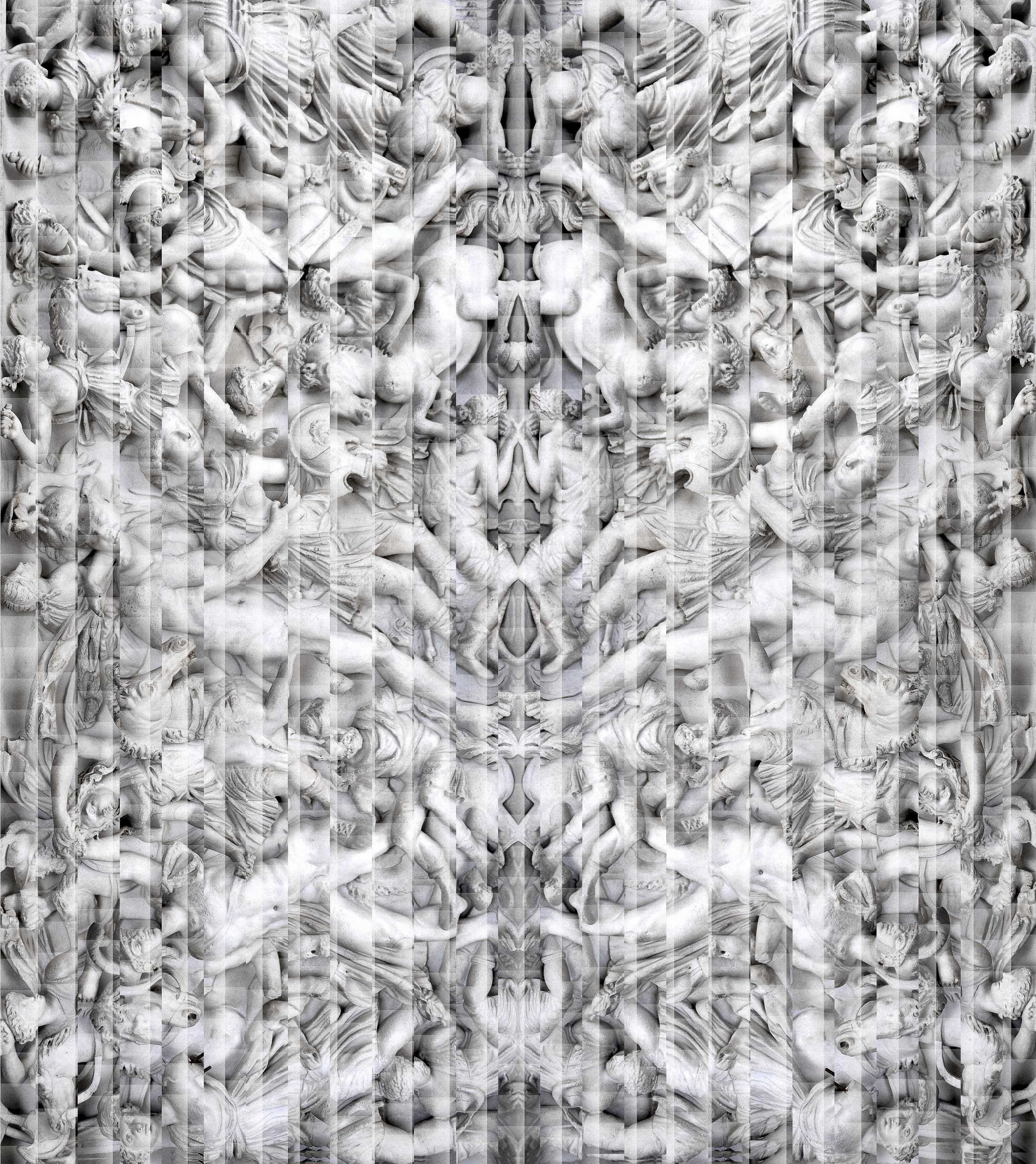
(Fragmenta Arcadiae) | MEDEIA
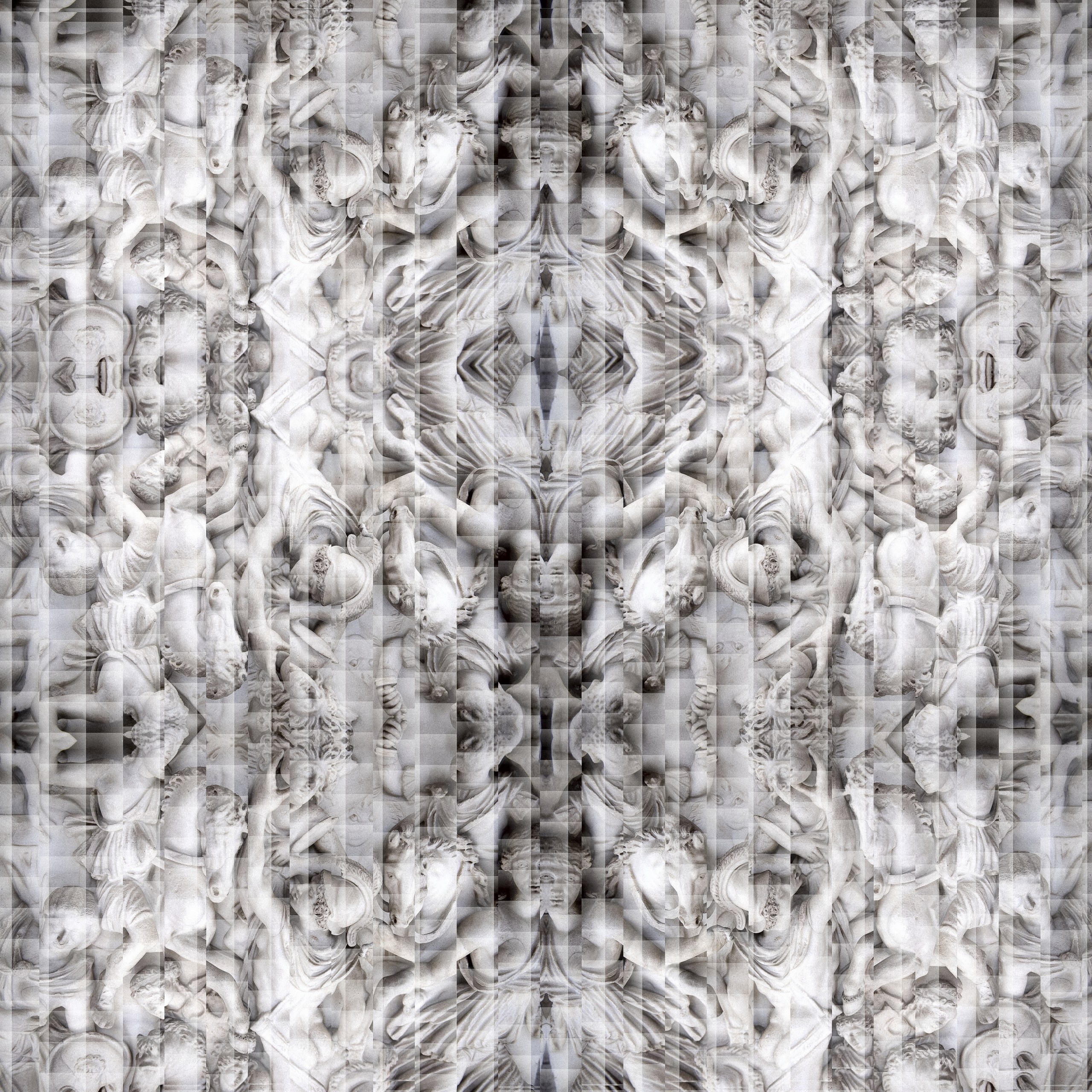
(Quattuor Figurae) | TETRAD OF DESIRE
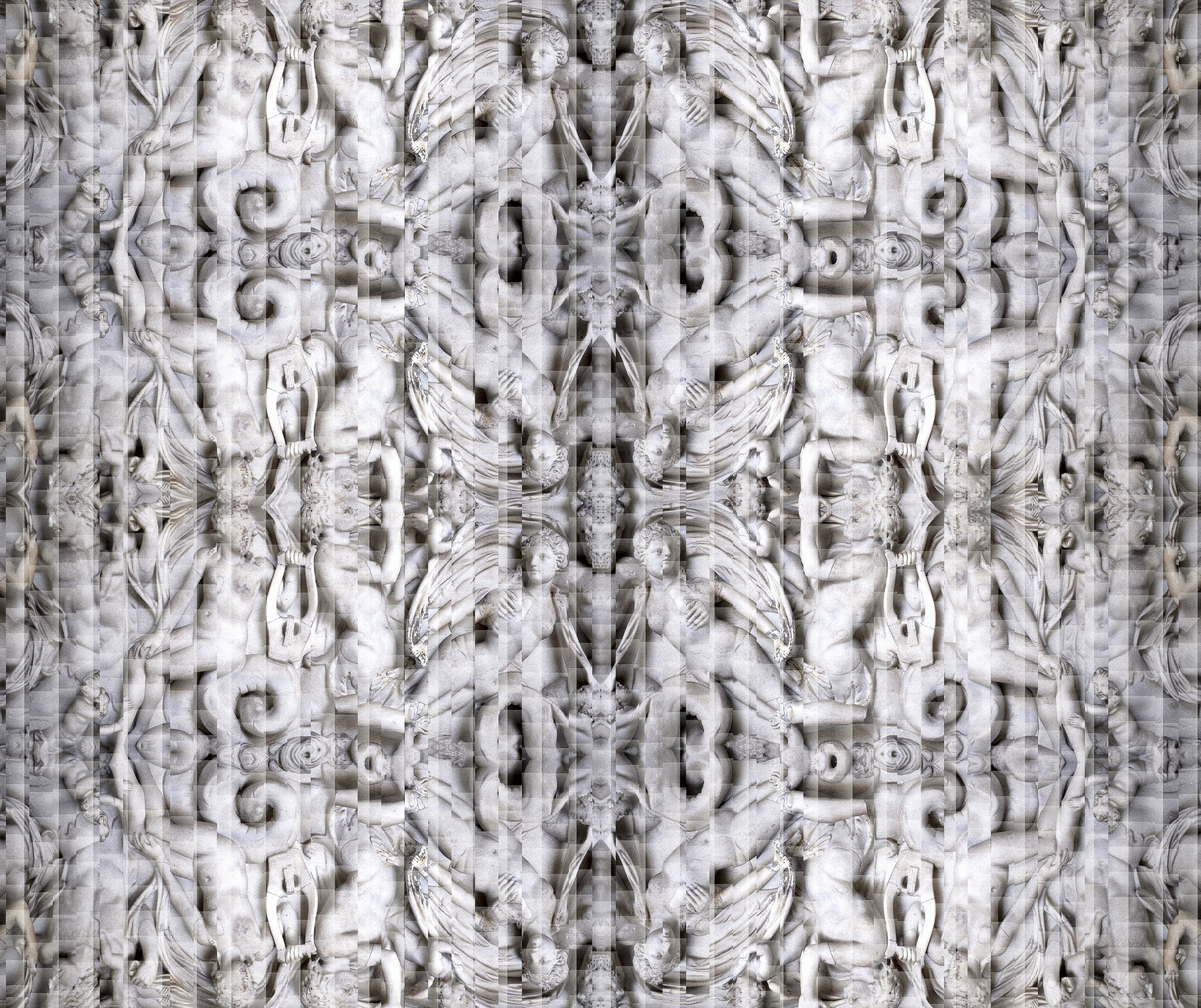
(Fragmenta Labyrinthi) | MINOTAURUS R.2
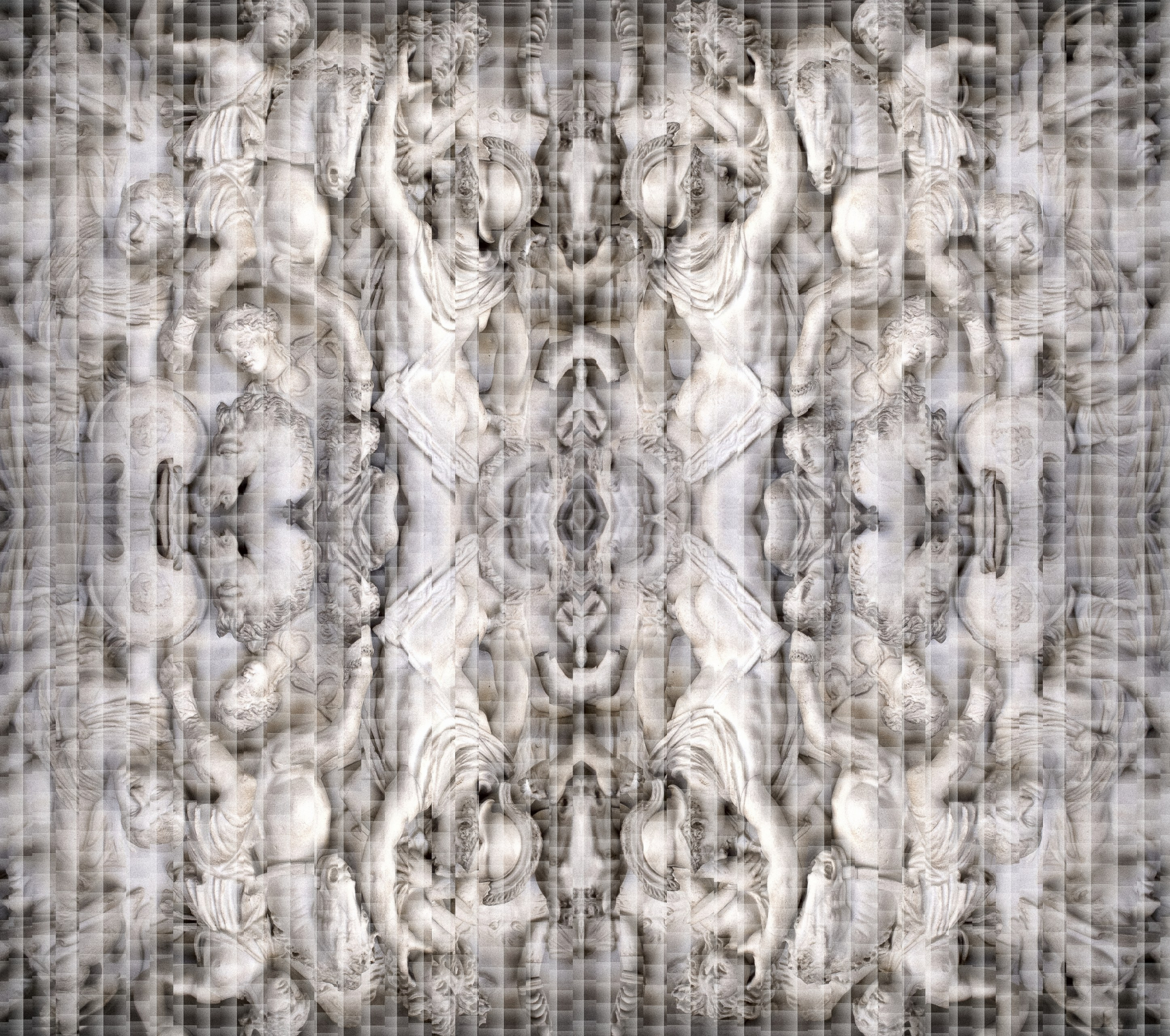
(Fragmenta Gorgonis) | ODYSSEIA R.2
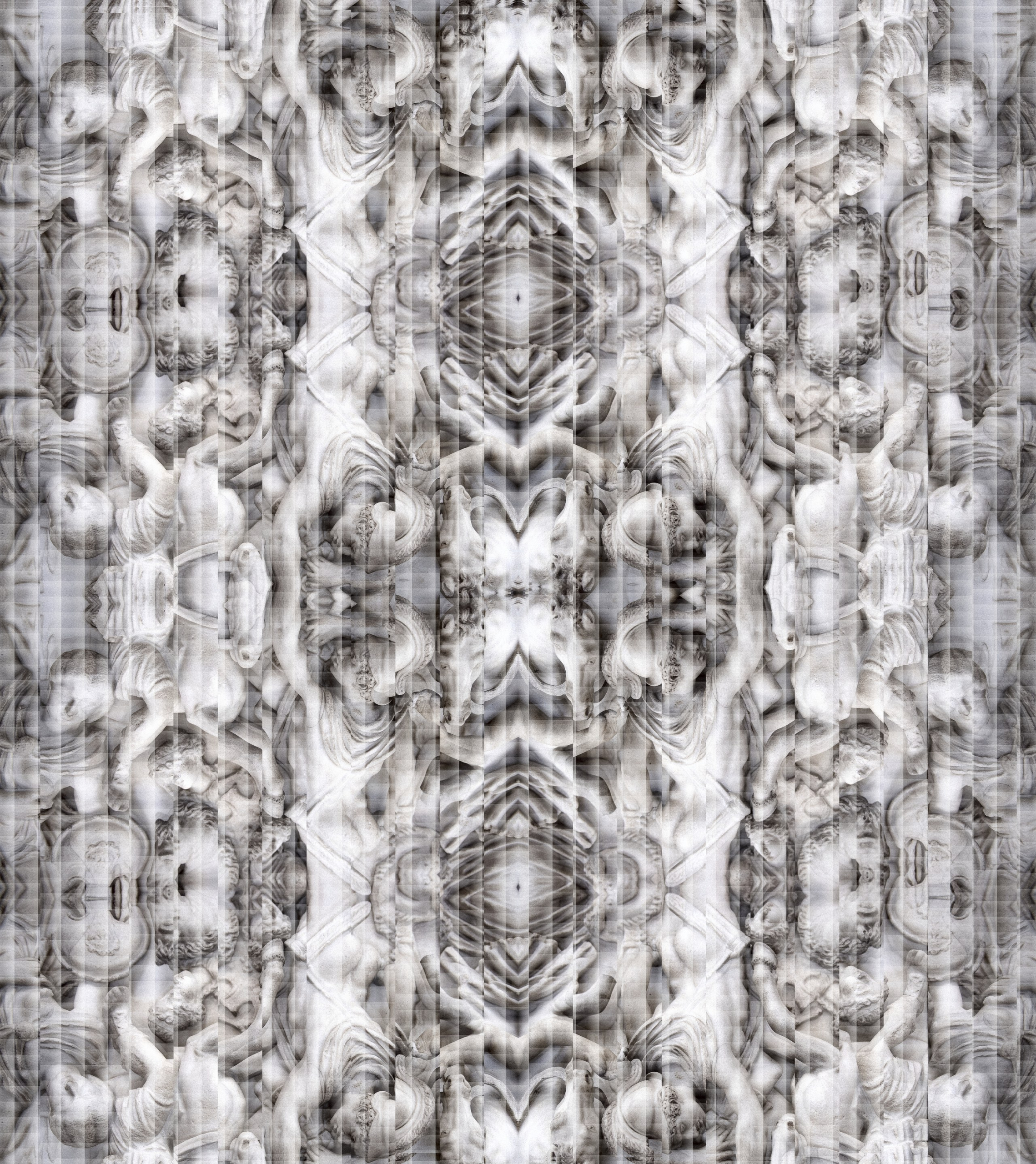
(Fragmenta Nymphaei) | NYMPHAEUM R.2
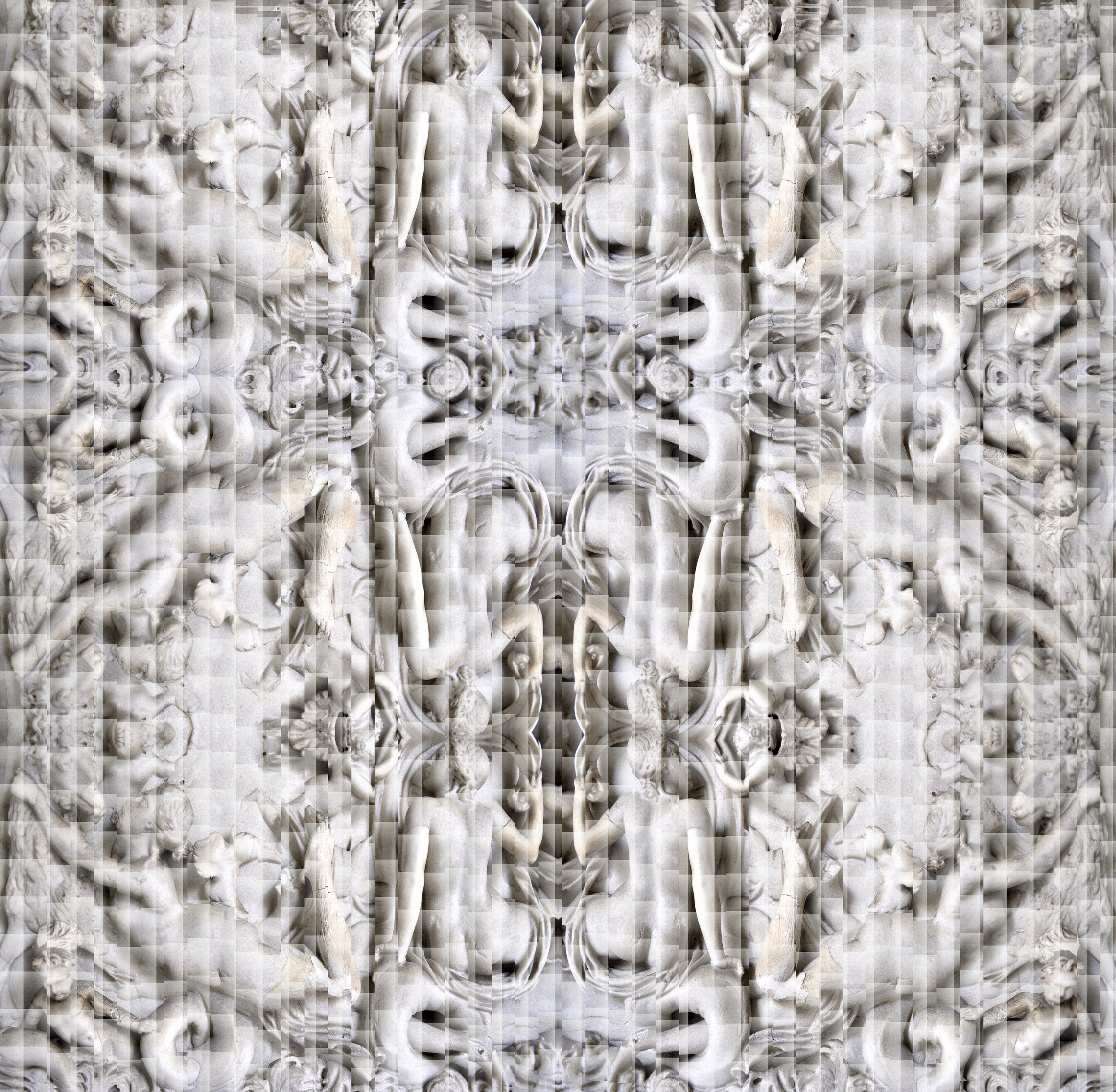
(Fragmenta Doni) | METIS R.2
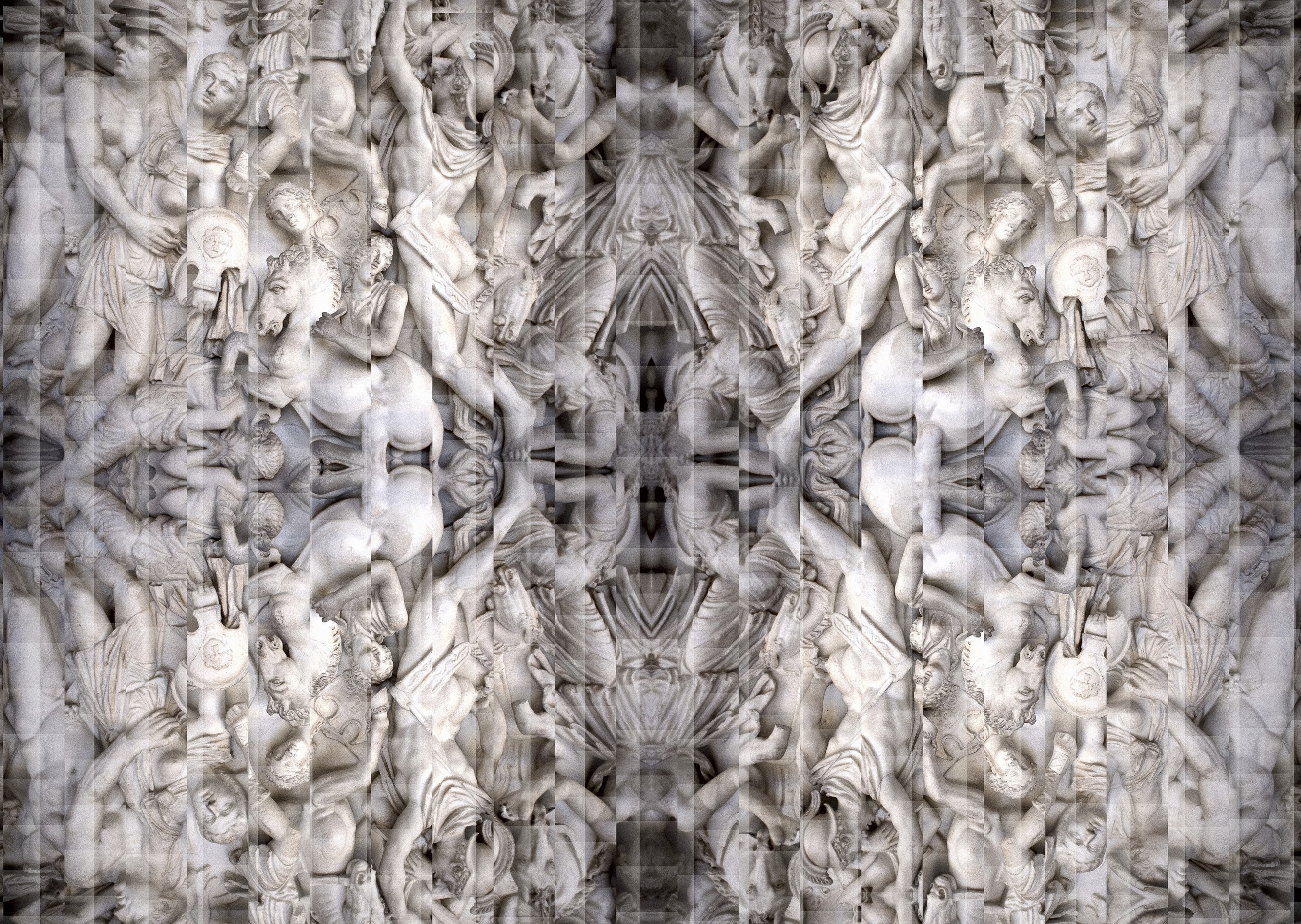
FRAGMENTA DEORUM I
+ CASSIOPEIA + MEDEIA + QUATTUOR FIGURAE + MINOTAURUS + ODYSSEIA + NYMPHAEUM + METIS +
ART PHOTOGRAPHY | CREATIVE CONCEPT | PROJECT
Series Statement
Ὄνειρος
by Alexandru Crișan
FRAGMENTA DEORUM I proposes a contemporary archaeology of the mythic body. In this series, Alexandru Crișan constructs a visual language that fractures and reconstitutes the divine. The works do not illustrate mythology; they excavate it. They treat the classical canon not as a stable heritage but as a malleable archive, one that can be decomposed, recomposed, multiplied, and dreamt anew.
Classical sculpture is repeatedly dismantled into micro-fragments, then reorganized through symmetrical lattices, pareidolic structures, and architectural matrices. Crișan’s approach mirrors the analytical processes of architectural drawing, where form is disassembled into its operative parts and then reconstructed in pursuit of spatial revelation. Yet here the reconstruction resists completion. Instead of coherence, the viewer encounters a controlled destabilization: bodies that echo, multiply, dissolve, and re-emerge in new configurations. What remains constant is the sense of a divine presence that has been shattered but not destroyed – a pantheon redistributed across the image surface. At the core of FRAGMENTA DEORUM is a tension between recognition and uncertainty. The images are engineered to provoke pareidolia: the perceptual impulse to find faces, limbs, gestures, or symbolic forms within ambiguous or repetitive structures. This semiotic instability is intentional. Crișan invites the viewer to become the interpreter, the excavator, the dreamer. In these works, meaning is not given; it is activated through looking. The divine becomes a field of potential readings rather than a fixed iconographic reference.
This dream-logic aligns the series with psychoanalytic theory, particularly Freud’s and Lacan’s understanding of the dream as a site where fragments of memory – visual, sensual, mythic – are condensed and displaced into new symbolic forms. In Crișan’s images, the gods return not as whole figures but as dispersed signals: a gesture that resembles Medeia, a face reminiscent of Cassiopeia, a serpentine curve suggesting Hecate. Myth becomes unconscious architecture. The works function as dream surfaces on which fragments of antiquity reassemble themselves into new psychic anatomies. Despite their digital precision and photographic origin, the compositions behave like architectural relics or ritual artifacts. Their symmetry recalls mosaics, temples, mandalas, and the sacred geometries of ancient cosmologies. Yet the eroticism embedded within the images – touch, exposure, bodily dissolution – places them firmly within the lexicon of contemporary art. Crișan’s practice acknowledges that the Greco-Roman world was erotically charged, ritually transgressive, and psychologically complex. The erotic becomes a method of inquiry, a way of revealing the tension between sacred desire and human vulnerability.
FRAGMENTA DEORUM is thus not a return to antiquity, but a reanimation of its semiotic and psychological residue. The works imagine what happens when gods are no longer worshipped but remembered; when myth persists not as story but as structure; when divine bodies are held together not by belief but by the dreamlike persistence of form. Crișan transforms classical fragments into contemporary apparitions, suspended between sculpture and photography, memory and hallucination, decay and rebirth. In this series, deities do not appear; they assemble themselves across the surface as afterimages. Divinity becomes an unstable architecture, an oneiric metamorphosis that both conceals and reveals its origin. FRAGMENTA DEORUM situates itself precisely in this liminal zone: between archaeology and dream, between mythology and psychoanalysis, between architectural reasoning and visual desire. It is less a catalogue of gods than a study of the forms they leave behind when their stories have been forgotten, but their images continue to haunt us.
In Crișan’s hands, fragmentation is not destruction – it is a generative force. Through decomposition and reconfiguration, the mythic body becomes newly legible, not as a relic of the past but as an evolving, living, dream-bound presence. These are not merely images; they are thresholds. Portals through which the viewer confronts the shifting nature of myth, the malleability of the sacred, and the enduring power of visual imagination when freed from narrative certainty. FRAGMENTA DEORUM proposes that the gods were never lost. They were shattered – and in the fragments, they continue to breathe.
CASSIOPEIA
(Fragmenta Arcadiae)

Art Limited Collector’s Edition of 10 + 2 Artist’s Proofs
archival art print, at the highest museum quality standards, on Fine Art paper from Hahnemuhle with pigment ink
150 x 170cm / 120 x 135cm / 90 x 100cm
Fragmenta corporis, fragmenta memoriae.
(Fragments of the body, fragments of memory)
“CASSIOPEIA (Fragmenta Arcadiae)” revisits the mythic topography of the ancient world by dismantling its most persistent illusion: coherence. What appears at first glance as a sculptural tableau rooted in Greek and Roman antiquity soon reveals itself as a palimpsest of fractures – an elaborate field of recomposed bodies, severed gestures, and recursive motifs extracted from the iconographic repertoire of the heroic age. Here, the Arcadian ideal is not represented but interrogated. The image performs a quiet dismantling of classical harmony, turning the serenity of myth into an unstable architecture of repetition and distortion. The figures – Perseus, Andromeda, Cassiopeia, Cetus, the warriors and horses carved into reliefs of imperial triumph – no longer behave as stable characters in a narrative. They dissolve into fragments, multiplied and mirrored until the mythic body becomes an unresolved pattern: part constellation, part psychoanalytic diagram. The work draws on Cassiopeia’s cosmic punishment – her forced inversion in the sky – to underscore a broader conceptual shift. These bodies are suspended in an endless rotation, neither fallen nor redeemed, caught in an epistemic loop where the heroic and the erotic cannot be disentangled. As the surface fractures into vertical strata, each strip functions like a temporal slice: a decomposition of sculpture into dream matter, where memory behaves like marble under stress. The white, near-ossified palette evokes both the funerary clarity of Roman sarcophagi and the bleaching effect of digital overexposure. Between these poles – classical stone and contemporary image – emerges a third register: a spectral field where Thanatos shadows Eros, where Freudian desire collides with mythological restraint, and where the “Et in Arcadia Ego” motif is less a memento mori than a reminder of mythology’s internal contradictions. “Fragmenta Arcadiae” does not reconstruct the myth of Cassiopeia. It demonstrates its collapse. What remains is an anatomy of cultural memory – disassembled, recombined, and exposed as a series of aesthetic residues that refuse to resolve into a single body or a single story.
MEDEIA
(Fragmenta Arcadiae)

Author’s Limited Edition of 100
fine art print at the highest quality standards, on Fine Art paper from Hahnemuhle with pigment ink
print size: 30cm/50cm/70cm/100cm/140cm on shortest edge
paper size: 30x50cm/50x70cm/70x100cm/100x140cm/140x200cm
Amor et furor in eodem corpore habitant.
(love and fury dwell within the same body – fragmentum apocryphum)
Medeia enters the image not as a character but as a fractured ontology, a myth caught at the moment of its dissolution. In this dense, white-on-white architecture, the classical relief becomes a field of mythic sediment, a stratified archive of gestures, limbs, and narratives compressed into a single, unstable surface. Figures that once narrated heroic triumph now fold into one another, generating a morphology closer to dreamwork than historical memory. The work reimagines Medeia’s myth through a process of deconstruction and recomposition. Fragments of Greek and Roman sculpture—Jason’s poised heroism, the Argonauts’ tension, equine bodies, shield – bearing warriors, and the spectral echo of Medusa – coalesce into a visual palimpsest where narrative has been replaced by psychic pressure. Medeia’s presence is felt not through depiction but through disturbance: a turbulence beneath the marble, the latent pulse of a story that refuses containment. Here, Arcadia no longer signifies pastoral refuge but a site of rupture. “Fragmenta Arcadiae” exposes the impossibility of returning to an ideal world once transgression has entered the mythic bloodstream. The erotic, the violent, the sacred, and the monstrous converge into an ambivalent topography where the heroic male order collapses under the weight of its own contradictions. This work is not a representation of Medeia; it is what remains when the myth has been eroded, recomposed, and forced to speak through its fractures. The image becomes a conceptual fresco of Eros and Thanatos, of feminine agency rewritten against the architectures that sought to contain it. What emerges is a mythic body in metamorphosis, caught between memory and oblivion, between the sculptural past and contemporary reinterpretation.
TETRAD OF DESIRE (Quattuor Figurae)
(Quattuor Figurae)

Art Limited Collector’s Edition of 10 + 2 Artist’s Proofs
archival art print, at the highest museum quality standards, on Fine Art paper from Hahnemuhle with pigment ink
150 x 180cm / 120 x 140cm / 90 x 110cm
Quattuor formae unum desiderium portant.
(four forms carry a single desire – fragmentum apocryphum)
TETRAD OF DESIRE (Quattuor Figurae) reconstructs the erotic imaginary of the Greco-Roman world through a method of systematic fragmentation and reassembly. The work begins with classical reliefs depicting mythic conflict, seduction, and ritual gesture, but decomposes them into a lattice of repeated units – an architecture of desire built from the ruins of antiquity. What emerges is neither a narrative scene nor a recognizable myth, but a four-fold apparition: a feminine quaternity suspended between symmetry and disorder. This tetradic configuration expands the tradition of Janus beyond duality into a speculative female counterpart: a structure not of passage, but of multiplication. Four bodies, four gestures, four echoes of touch. Their erotic charge is not ornamental, but structural. In Roman and Hellenistic contexts, the erotic was never merely private; it functioned as a cultural engine, a mode of knowledge, a ritual technology. Here, eroticism becomes epistemic. The touch of one figure becomes the memory of another. Identity dissolves into repetition, and repetition becomes a kind of invocation. The grid does not stabilize the image. It unsettles it. Each square becomes a micro-relief, a self-contained interval where gesture loses its origin. What appears at first as ornament is, in fact, a deconstruction of the mythic body – an undoing of the unity that classical sculpture presupposes. The figures are no longer subjects; they are vectors, conduits of desire refracted through the logic of symmetry. Their eroticism is recursive, folding back on itself until it becomes pattern rather than scene, structure rather than story. TETRAD OF DESIRE is not a return to antiquity. It is an excavation of its unconscious. The work proposes that myth survives not in its narratives, but in its compulsions: the repetition of forms, the persistence of gestures, the erotic as a site of knowledge. What remains is a quaternity without origin – a ritualized geometry of desire carved from the debris of classical memory.
MINOTAURUS R.2
(Fragmenta Labyrinthi)

Art Limited Collector’s Edition of 10 + 2 Artist’s Proofs
archival art print, at the highest museum quality standards, on Fine Art paper from Hahnemuhle with pigment ink
150 x 170cm / 120 x 135cm / 90 x 110cm
Filum Ariadnes in somnio soluitur.
(Ariadne’s thread unravels in the dream – fragmentum hellenico-latinum)
If the first Minotaur image proposes a plan, MINOTAURUS R.2 (Fragmenta Labyrinthi) lingers in what happens after the plan has been internalized. The labyrinth is no longer presented as a clear diagram; it has become a texture, a moving atmosphere of marble and memory. Instead of a “tabula” to be read, we encounter a surface that behaves like the residue of a dream – dense, repetitive, coherent only in the way that dreams are coherent: through mood, rhythm and the stubborn return of certain forms. In the Cretan myth, the labyrinth is a device for containing the unacceptable hybrid at its center. In psychoanalytic terms, it is an architecture of repression: a structure built to manage what cannot be acknowledged. MINOTAURUS R.2 (Fragmenta Labyrinthi) imagines what remains when that structure is no longer entirely successful. The fragments of the classical world do not stay still. They blur, overlap, migrate vertically like currents. The image feels less like a prison for the Minotaur than like the interior weather of a psyche in which the Minotaur has become indistinguishable from the one who wanders. Freud’s dream-work is inscribed here in the way forms condense and dissolve. Bodies, weapons, draperies and faces do not present themselves as discrete elements but as overlapping states: traces of impact, sacrifice, erotic tension and divine authority that never fully resolve. Lacan’s divided subject – perpetually misaligned with itself – finds an echo in this layered field where recognition is always partial, always shifting one step to the side. One feels the presence of conflict, but not its resolution. For Jung, the bull and the labyrinth belong to a constellation of archetypes around power, sacrifice and confrontation with the shadow. Crișan’s image does not fix those archetypes; it lets them circulate. MINOTAURUS R.2 (Fragmenta Labyrinthi) stages an encounter with the myth not as story but as psychic climate. The sacred and the violent are suspended in a state of diffuse intensity, as if the stones of an ancient relief had started to dream themselves. Within Fragmenta Deorum, this work can be understood as a study of how myths persist when their temples are gone and their rituals forgotten. What survives is not the clear line of Theseus’ narrative, but a field of impressions – an oneiric labyrinth woven from visual afterimages. Crișan offers that field to the viewer as a space of projection, inviting each gaze to become its own Ariadne, tracing and losing its thread in the same movement.
ODYSSEIA R.2
(Fragmenta Gorgonis)

Author’s Limited Edition of 100
fine art print at the highest quality standards, on Fine Art paper from Hahnemuhle with pigment ink
print size: 30cm/50cm/70cm/100cm/140cm on shortest edge
paper size: 30x50cm/50x70cm/70x100cm/100x140cm/140x200cm
In somnis, quod prohibetur redit sub forma pulchritudinis.
(in dreams, what is forbidden returns in the form of beauty – fragmentum apocryphum)
ODYSSEIA R.2 (Fragmenta Gorgonis) shifts the Homeric problematic from “map” to “apparition.” If the Odyssey is the epic of return, it is also the epic of deferral: a prolonged postponement of resolution, a narrative sustained by detours, substitutions, and tests that repeatedly displace the subject from any stable home. This work translates that logic into a surface where meaning behaves like a dream – emerging, dissolving, and re-forming without submitting to definitive interpretation. The title’s insistence on Fragmenta is not an aesthetic description but a conceptual claim. Fragmentation here is the condition of contemporary memory: the classical world reaches us discontinuously, through shards – museum fragments, textbook reproductions, cinematic residues, tourist glances, inherited iconographic habits. Crișan’s procedure radicalises this condition by treating the fragment not as loss but as a generative unit. The image becomes a site where relics are not restored into wholeness but recomposed into a new symbolic economy. The gods persist, but as dispersed signals rather than sovereign bodies. Myth survives as pattern, rhythm, recurrence. The Gorgon reference is decisive because it names a particular kind of encounter: one that cannot be looked at innocently. In antiquity, the gorgoneion is an apotropaic device, placed at borders and on shields to convert danger into protection. Psychoanalysis recognises a homologous structure: what is most feared is often what returns as symptom, fascination, or aestheticisation. Freud’s dream-work offers the mechanics – condensation and displacement – but Lacan sharpens the stakes: the traumatic kernel of the Real cannot be integrated directly, so it returns through the detour of the signifier, staged as a visual event that both attracts and disturbs. The “Gorgon” becomes, in this sense, a figure for the limit of representation – an emblem of what cannot be fully symbolised, yet cannot be excluded. The Odyssey’s monsters are not simply external threats; they are narrative machines that test identity under pressure. Read oneirically, they are configurations of desire and anxiety: seduction, aggression, forgetting, repetition. ODYSSEIA R.2 treats myth in this register. The image does not deliver a single iconographic message; it offers a field in which interpretation is activated, suspended, and reactivated. Meaning is produced in the act of looking, yet never stabilised as doctrine. This semiotic instability is not incidental – it is the work’s philosophical position. Beauty is not the closure of meaning, but the condition under which the forbidden can return without immediately being rejected. A Jungian reading intensifies the work’s relevance to the series. The Odyssey’s return is individuation under duress: a passage through archetypal trials rather than moral lessons. In this frame, the Gorgon is not merely terror but a threshold-image: a sign that marks the border between the cultivated self and its archaic remainder. What the work ultimately “documents” is not a mythological episode but a psychic itinerary – an oneiric metamorphosis in which the classical canon becomes a mirror for contemporary interiority.
NYMPHAEUM R.2
(Fragmenta Nymphaei)

Art Limited Collector’s Edition of 10 + 2 Artist’s Proofs
archival art print, at the highest museum quality standards, on Fine Art paper from Hahnemuhle with pigment ink
150 x 185cm / 120 x 150cm / 90 x 110cm
Somnia ad fontes redeunt.
(dreams return to the springs)
In NYMPHAEUM R.2 (Fragmenta Nymphaei), Alexandru Crișan stages the nymph not as a figure to be depicted, but as a psychic function: the threshold where desire meets concealment, where nature becomes an interior, and where the sacred survives as a sensation rather than a doctrine. The nymphaeum – historically a grotto, a spring-house, a devotional niche for watery presences – operates here as an oneiric architecture: a place that does not narrate, but receives projection. The work belongs to FRAGMENTA DEORUM, Crișan’s contemporary practice of decomposing Greco-Roman visual heritage and reconstituting it through digital construction. As an architect, he approaches the classical archive as a structural system: a repertoire of joints, surfaces, and latent orders. Fragmentation becomes a method of knowledge. What emerges is not a reconstruction of antiquity but a psychoanalytic image-field: Freud’s condensation and displacement translated into visual syntax; Lacan’s insistence that the gaze is never innocent, that it is bound to lack; Jung’s conviction that archetypes return as form before they return as meaning. The nymphic register – dryad, naiad, the feminine of grove and water – works here as a carrier of the anima (Jung), but also as a critique of how “beauty” is culturally staged. The erotic is present, yet it is not offered as illustration; it is treated as a pressure, a charge, an unstable proximity between the sacred and the sensuous. The image becomes a mnemonic surface where classical bodies, pastoral reverie, and vegetal myth circulate as afterimages. In this sense, NYMPHAEUM R.2 is less a scene than a dream-mechanism: an invitation to interpret without closure, to recognise without mastering, to accept that the gods – like dreams – do not explain themselves. They recur.
METIS R.2
(Fragmenta Doni)

Author’s Limited Edition of 100
fine art print at the highest quality standards, on Fine Art paper from Hahnemuhle with pigment ink
print size: 30cm/50cm/70cm/100cm/140cm on shortest edge
paper size: 30x50cm/50x70cm/70x100cm/100x140cm/140x200cm
Donum manet: sensus fugit. Metis non celat—multiplicat. Somnus est lex interpretationis.
(the gift remains: meaning flees. metis does not conceal – it multiplies. sleep is the law of interpretation.)
Here, Metis is not the architect of a single ruse but the patron of unstable messages: a cunning that works by remainder, by residue, by what persists after the narrative has “ended”. In Jungian terms, the gift resembles an archetypal lure – an emissary from the collective imagination that crosses into the personal dream without asking permission. Umberto Eco’s semiotics sharpens the dilemma: a sign is never solitary; it calls other signs, other stories, other lists. The “gift” therefore expands into an infinite catalogue of associations – heroic, erotic, devotional, violent – without settling into a final key. This is precisely the point: the Trojan mechanism is not a historical trick but a recurring psychic structure. What is offered is a passage: from certainty to reading, from possession to interpretation. The work becomes a contemporary reliquary of myth-museum-like in its presence, but deliberately unfinished in its meanings, so the viewer’s own oneiric logic completes the circuit.
p.s. Mētis is Odysseus’ “cunning intelligence” (the intelligence of stratagems rather than force), while donum preserves the Trojan “gift” as an unstable sign.
Artifex
Alexandru Crișan (b. Bucharest, Romania 1978) is a visual artist interested in the existential complementarity of objective and nonobjective forms of expression. As far as the latter is to be unpacked, his “counter-professional” career in photography began in 2008; his paintings stand, for almost three decades, as the most intimate, borderline atavistic, acts of divulgence. Assuming that taxonomy is of any consequence, he is partial to fine-art photography and Abstract Expressionism. The eclectic nature of his projects is, therefore, a given. His photography is a direct result of compulsive visual disquisitions on impromptu portraiture, architectural equivocations, parametric manipulations, “hybrid storytelling” and evocative conservationism. Most of his long-term, open-ended photographic series – such as “Minimal White / Minimal Black”, or “Lost Highway / My Car is Your Avatar” – are meditations on loci and human perceptions. The research on and within photography gradually afforded him a surreal vision of immateriality, which he debonairly likes to describe as “tormenting several stages of a hyperrealist mise en abyme”. Since 2015, he developed quite a few “meta-projects”: “Erotoarchitecture”, “Metropoesis”, “Hortus Conclusus”, “Alex Transcends the Balkans for a Bottle of Perfume”, “Mechaniarchy” and “Shoah”, under the compelling awareness and besetting exploration of otherness and of self. Crișan’s works have been presented in over 50 international exhibitions, have been published in over 100 peer-reviewed magazines, have received over 500 international awards and nominations, and are part of several privately owned collections and art galleries.
Copyright © Alexandru Crisan 2008-2015.R2025. All rights reserved. All images and texts featured on this website are under strict copyright regulations and require a license for reproduction in print or online. Any artwork cannot be used without written consent from its author. Please note that any unauthorized use of images from this website is in breach of copyright regulations. Detailed informations on TERMS OF USE.